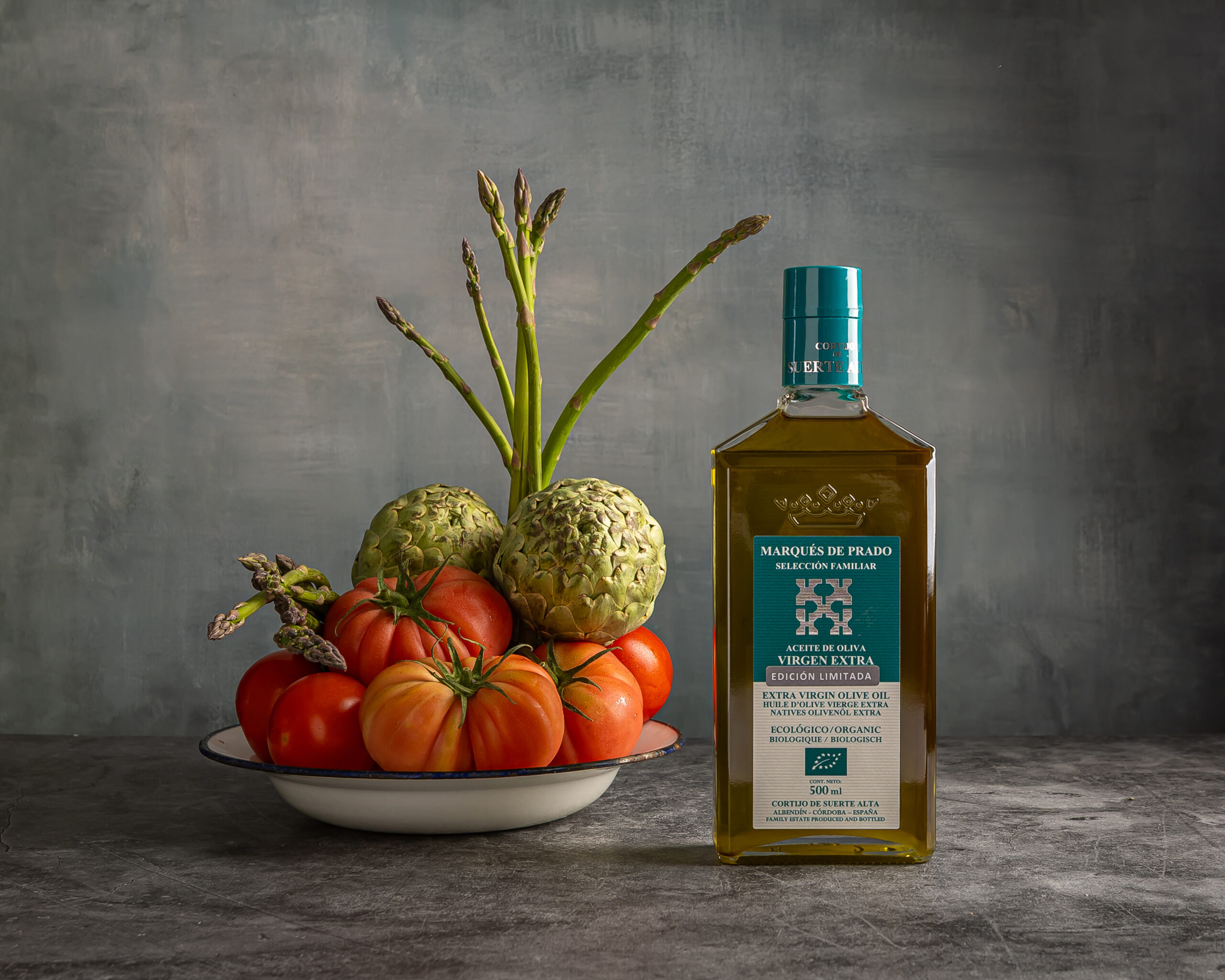
Picual olive oil is Spanish cuisine’s best-kept treasure. It is the richest in polyphenols and antioxidants on the entire peninsula, the most stable under heat, and the one with the most documented cardiovascular benefits. And yet, it still has not achieved the recognition it deserves outside Andalusia.
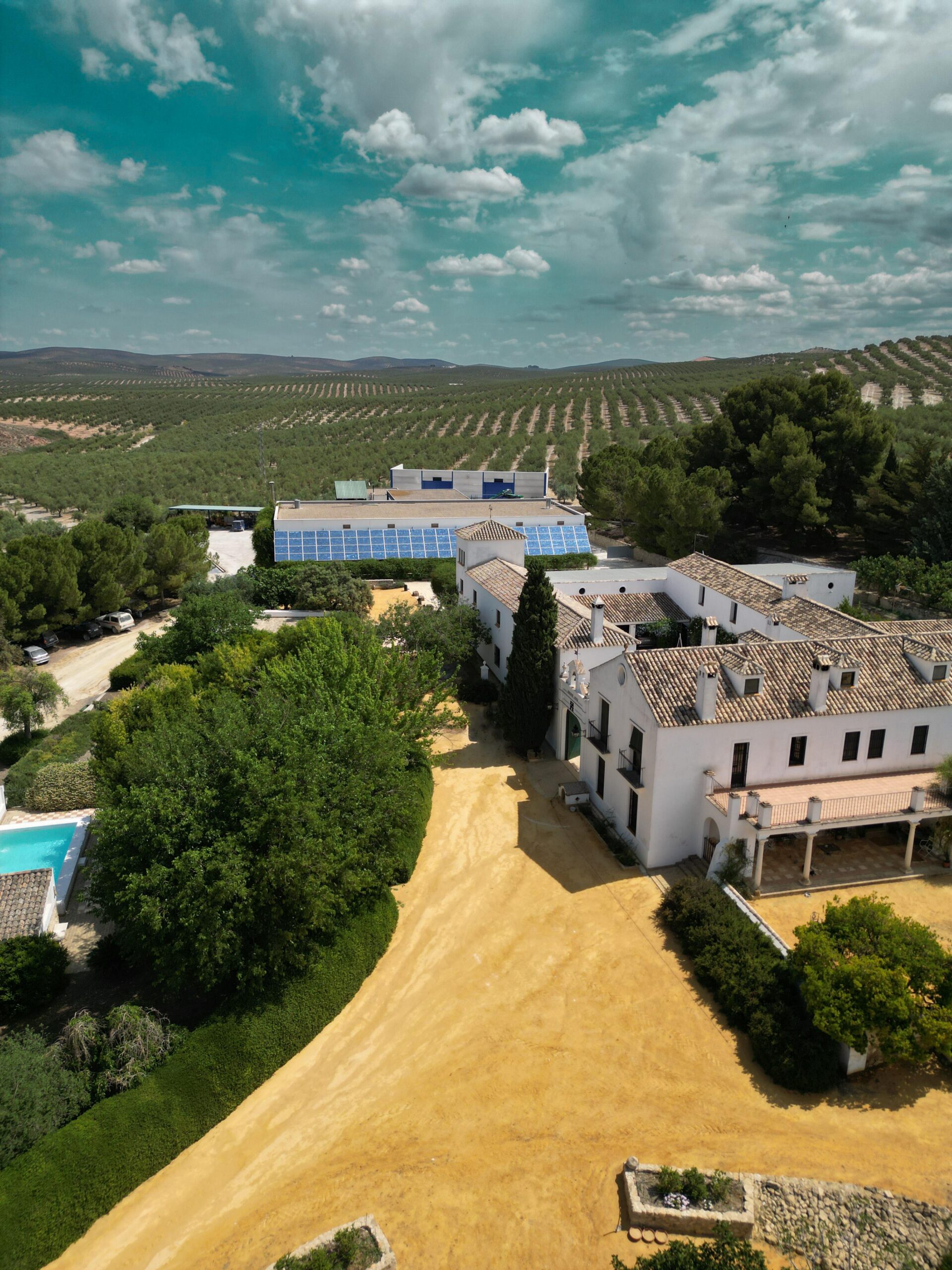
At Cortijo de Suerte Alta, we have been working with the Picual variety for over 30 years in the heart of the D.O.P. Baena, in Albendín (Córdoba). Our Picual at Veraison is the purest expression of this olive: hand-harvested when the olive has only just begun to change color, with polyphenol levels exceeding 700 mg/kg. We have won more than 80 international awards with it. In this article, we explain why it is so special.
What is Picual olive oil?
Picual oil is a monovarietal extra virgin olive oil made exclusively from Picual olives (Olea europaea cv. Picual), also known as Marteño, Lopereño, or Nevadillo. It is Spain’s most widely cultivated olive variety, accounting for more than 50% of national production, and it is concentrated mainly in the provinces of Jaén, Granada, and Córdoba.
The name “Picual” refers to the pointed shape (pico) at the end of the fruit. It is a robust variety, drought-resistant and with a very high extraction yield, which makes it the favorite of producers across Andalusia.
Key Fact
The Picual variety accounts for more than 50% of the extra virgin olive oil produced in Spain. In the D.O.P. Baena, where Cortijo de Suerte Alta is located, it coexists with local varieties such as Picudo and Hojiblanco, which produce exceptional blends such as our Natural Coupage.
Organoleptic characteristics of Picual oil
If you have ever tried an extra virgin olive oil with strong character and personality, it was very likely a Picual. Its sensory characteristics are highly recognizable:
- Color: Deep green in early harvest, evolving toward golden yellow as it ripens.
- Aroma: Intense green fruitiness, with notes of freshly cut grass, tomato leaf, artichoke, green almond, and sometimes a hint of green banana.
- Flavor: A fruity entry followed by pronounced bitterness and a characteristic throat pungency—an unmistakable sign of high oleocanthal and polyphenol content.
- Texture: Fluid with good visual density, leaving a smooth, persistent film on the palate.
The bitterness and pungency of Picual are not defects: they are the chemical signature of its richness in polyphenols and antioxidants.
The bitterness and pungency that many first-time consumers interpret as flaws are, in fact, exactly the opposite: they are direct indicators of the content of oleocanthal, oleacein, and other polyphenols—the compounds responsible for the health benefits that science has been documenting for decades.
Sensory comparison between the main varieties
| Variety | Fruity | Bitterness | Pungency | Polyphenols |
|---|---|---|---|---|
| Picual (veraison) | Intense green | High | High | 600–900 mg/kg |
| Arbequina | Soft green | Low | Low | 150–300 mg/kg |
| Hojiblanca | Ripe/green | Medium | Medium | 200–400 mg/kg |
| Cornicabra | Ripe | Medium-high | Medium | 300–500 mg/kg |
| Picudo | Tropical Fruits | Low-medium | Low | 200–350 mg/kg |
What is the veraison harvest, and why does it matter?
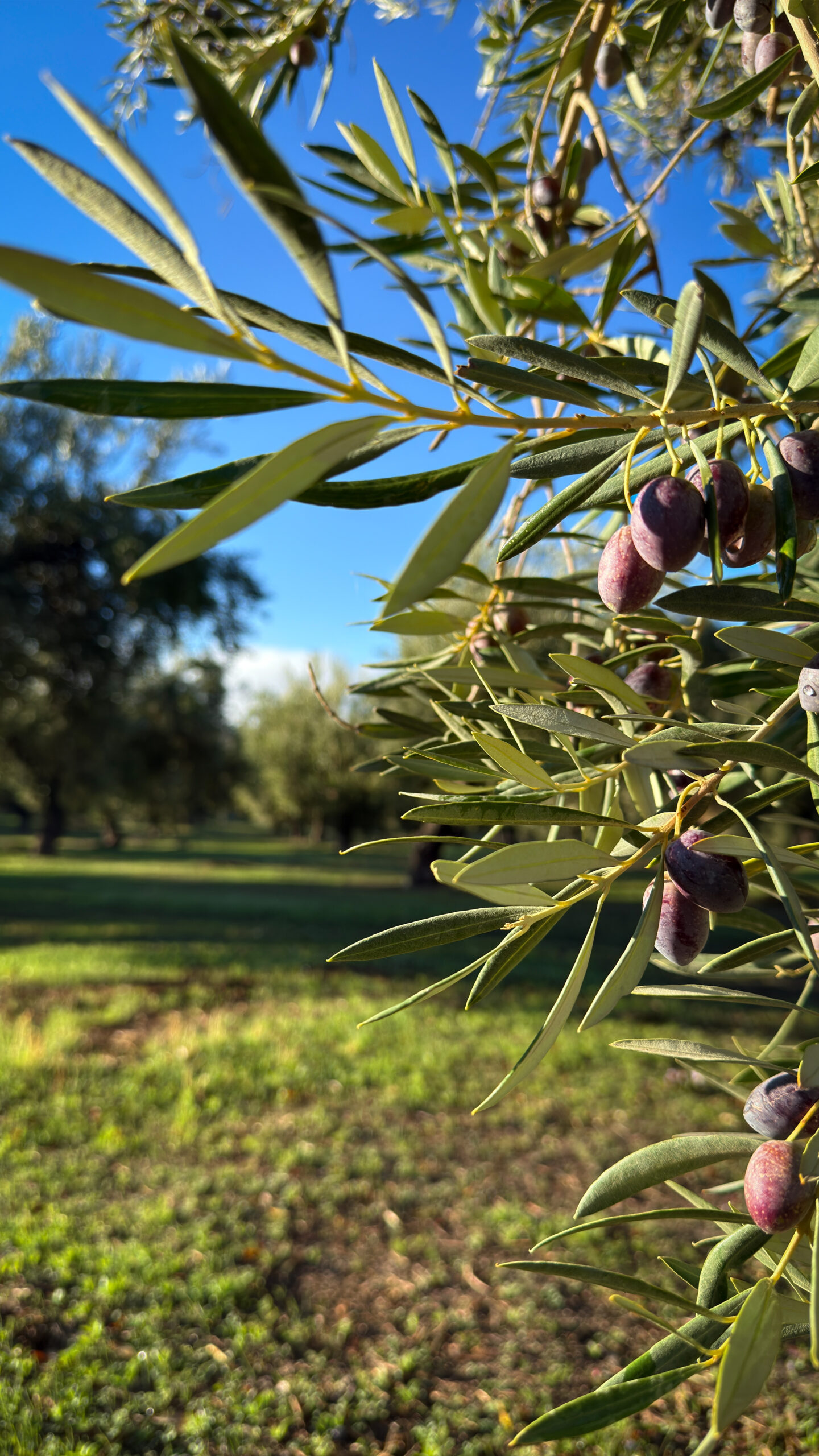
Veraison is the stage of olive ripening when the fruit changes color from green to purple or black. This change does not happen all at once: it starts in the skin and progresses toward the pit over weeks. The veraison window is short—often just 2–3 weeks—and it is when the olive reaches its peak polyphenol levels.
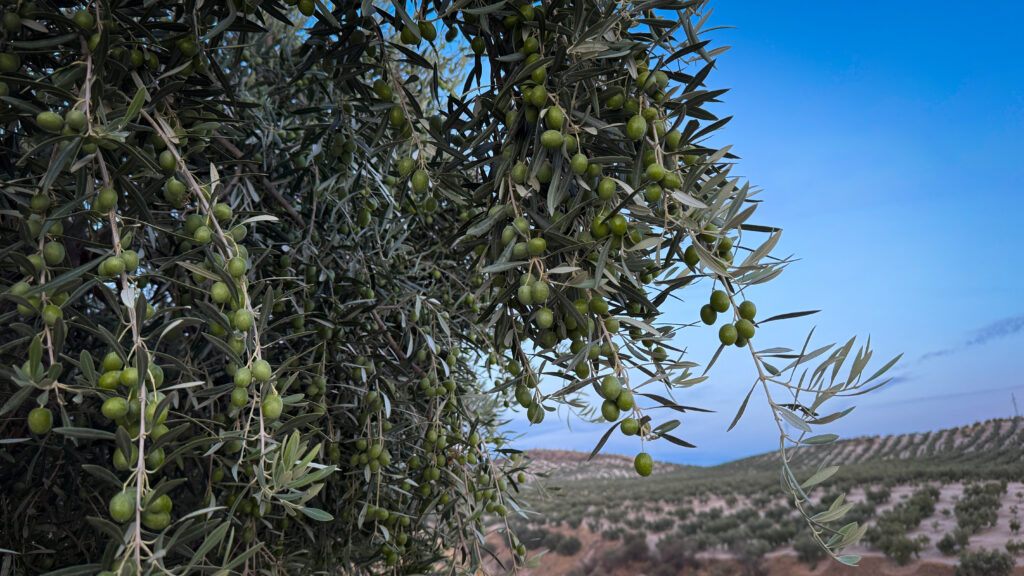
When the olive is left to fully ripen, polyphenols degrade and the oil loses part of its antioxidant power. That is why early harvesting at veraison—although it yields less oil per kilo of olives—produces oils of far superior sensory and nutritional quality.
Why does Picual at Veraison have more polyphenols?
At veraison, the Picual olive concentrates up to 3 times more oleocanthal and oleacein than in late harvest. These compounds are responsible for the throat pungency and bitterness, and they have documented anti-inflammatory properties similar to those of ibuprofen (at equivalent doses).
Health benefits of Picual oil
Early-harvest Picual oil has the strongest body of scientific evidence for health benefits among all olive oils. These are the main ones:
1. Rich in polyphenols and antioxidants
The polyphenols in Picual oil—especially oleocanthal, oleacein, and oleuropein—are powerful antioxidants that neutralize free radicals and protect cells from oxidative damage. The European Union officially recognizes that oils with more than 250 mg/kg of polyphenols contribute to the protection of LDL from oxidation (EU Regulation 432/2012).
2. Natural anti-inflammatory action
Oleocanthal is the star compound in Picual oil. Researchers at Rutgers University showed in 2005 that oleocanthal acts on the same molecular pathways as ibuprofen. An intake of 50 ml of EVOO with a high concentration of oleocanthal is equivalent, in its anti-inflammatory effect, to a sub-therapeutic dose of ibuprofen.
3. Cardiovascular protection
Picual is the most oxidatively stable olive oil, making it ideal both raw and for cooking. Its high oleic acid content (monounsaturated) supports a healthier blood lipid profile by increasing HDL (“good” cholesterol) and reducing oxidized LDL.
4. High heat stability
Thanks to its fatty-acid composition (high in oleic, with natural tocopherols), Picual is the most stable olive oil for frying. It withstands temperatures up to 210°C without significant degradation, making it the healthiest and most flavorful option for Mediterranean cooking.
How to use Picual oil in cooking
The intense personality of early-harvest Picual makes it shine in applications where it can express itself:
- Pan con tomate: This Catalan and Andalusian classic gains a new dimension. Picual’s pungency and the tomato’s acidity are a perfect match.
- Salmorejo and gazpacho: An essential base. Picual adds the bitter-green backbone that balances the tomato’s sweetness.
- Griddled fish: A drizzle of Picual at veraison over a freshly cooked gilt-head bream or sea bass is one of Mediterranean cuisine’s great pleasures.
- Chargrilled vegetables: Picual’s vegetal notes perfectly complement smoky flavors.
- Fried foods: It is the oil most recommended by chefs for frying. It creates crispier crusts and is absorbed less by the food.
- Baking: Replacing butter with Picual in sponge cakes and muffins reduces saturated fat and adds a very interesting, distinctive note.
Cortijo de Suerte Alta’s Picual at Veraison
Our Picual at Veraison is born in Cortijo de Suerte Alta’s organic olive grove, in Albendín (Córdoba), at 530 m above sea level in the heart of the D.O.P. Baena. Here, the Picual olive grows alongside centuries-old olive trees and an exceptional microclimate that extends ripening and concentrates aromas.
Harvesting is done by hand or with gentle vibration before October 20, when the olive is at veraison. Transport to the bioclimatic mill takes no more than 4 hours from picking, and two-phase cold extraction ensures that polyphenols and aromas reach the oil intact.
The result is an early-harvest monovarietal EVOO with more than 700 mg/kg of polyphenols, selected among the Top 100 EVOOs in the world by Evooleum, Flos Olei, and Terraoleum for several consecutive years.
Frequently asked questions about Picual oil
Picual oil is a monovarietal EVOO made from Picual olives, the most widely cultivated variety in Spain. It is characterized by its high polyphenol content, aromatic intensity, and exceptional oxidative stability, making it ideal both raw and for cooking at high temperatures.
Early-harvest Picual can reach polyphenol concentrations of 600–900 mg/kg, well above the 250 mg/kg minimum required to use the EFSA cardiovascular health claim. Suerte Alta’s Picual at Veraison typically exceeds 700 mg/kg.
Veraison is the moment when the olive changes color from green to purple, before fully ripening. At this point, the concentration of polyphenols, oleocanthal, and vitamin E is at its maximum. Harvesting then—although it yields less oil per kilo—produces EVOOs with greater aromatic complexity and more health benefits.
Picual is extremely versatile. Its high oxidative stability makes it ideal for frying (it withstands up to 210°C), but its aromatic personality shines raw: on pan con tomate, in salmorejo, gazpacho, salad dressings, griddled fish, and chargrilled vegetables.