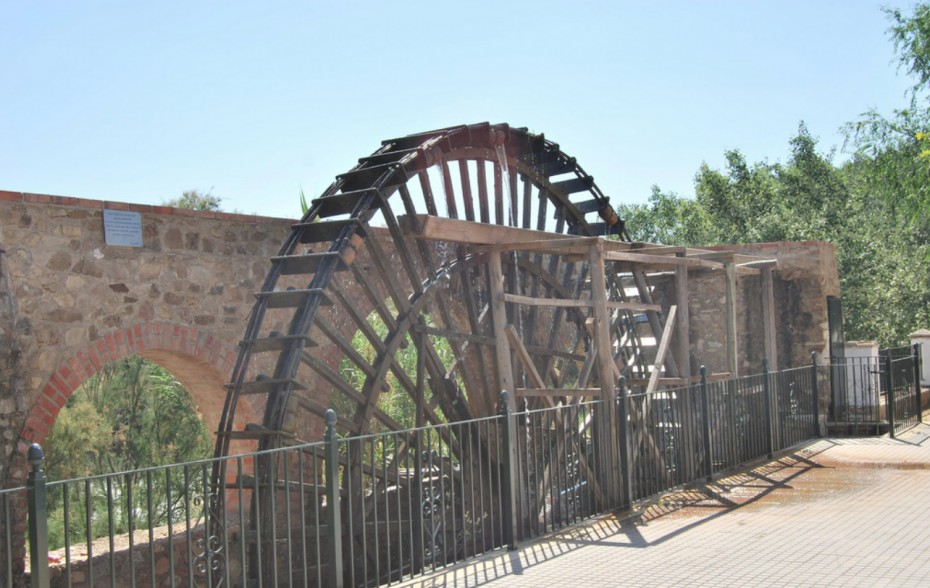
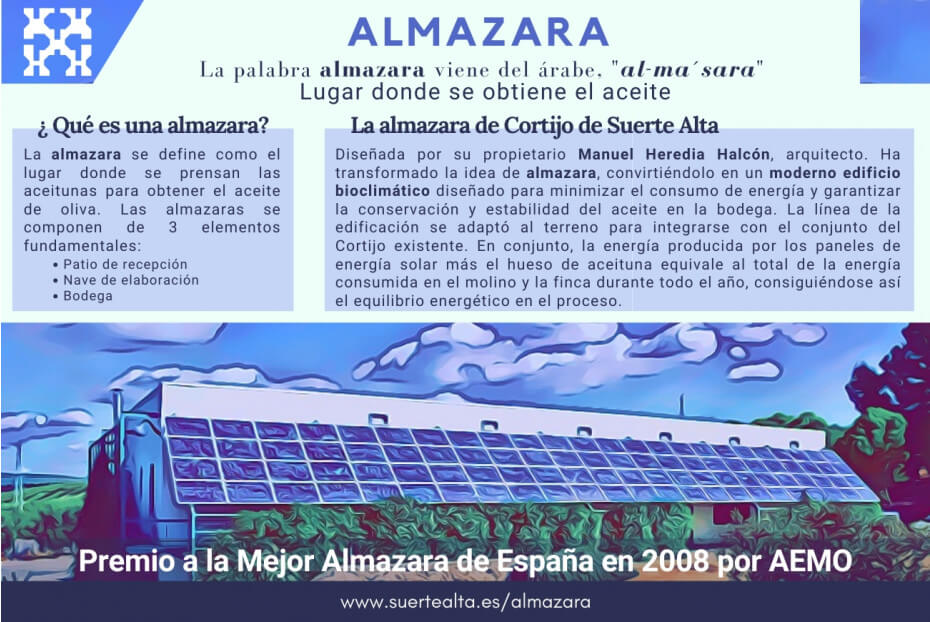
The word almazara comes from the Arabic al-ma’sara, “place where oil is obtained”. It is defined as the place where olives are pressed to obtain olive oil.
KEY FACT
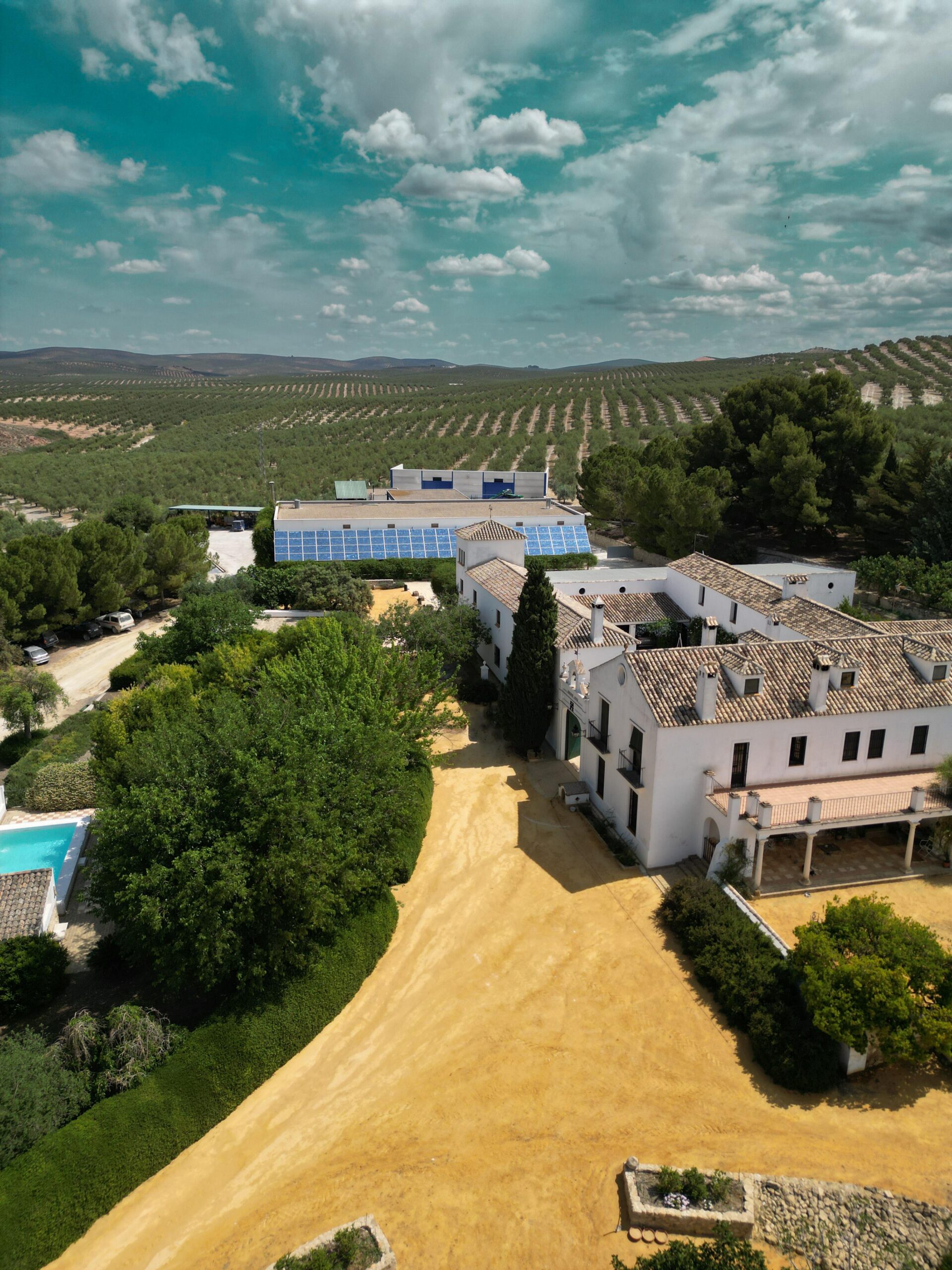
Suerte Alta’s olive oil mill generates the same energy it consumes throughout the year with its solar panels and olive pits.
The first olive oil mills, of very ancient origin (Copper Age), consisted of a stone mortar where small quantities of olives were pressed.
The three parts of a modern olive oil mill
- Reception area: where olives are received, cleaned, washed, weighed, and stored before milling.
- Processing area: an enclosed space where olives are milled, the paste is beaten, centrifuged, and cleaned of water, then the oil is stored in stainless steel tanks.
- Cellar: an enclosed, dark space, free of humidity and with a stable temperature, featuring conical bottom tanks to facilitate cleaning.
The olive oil mill at Suerte Alta
Conceived by its owner, Manuel Heredia Halcón (architect), it is a bioclimatic building designed to minimize energy consumption and ensure the preservation of the oil in the cellar. Its design adapted to the terrain, partially burying the cellar and protecting the building with pergolas, plant screens, and photovoltaic panels. The mill’s air conditioning and hot water use olive pits as fuel. Between the solar panels and the olive pits, the mill generates the same energy it consumes throughout the year.
In 2008, Suerte Alta’s olive oil mill received the AEMO award for the Best Olive Oil Mill in Spain.
Frequently Asked Questions about the Olive Oil Mill
It comes from the Arabic al-ma’sara, “place where oil is obtained.”
The reception area, the processing area, and the cellar.
With photovoltaic panels and by burning olive pits, achieving annual energy balance.
The AEMO award for the Best Olive Oil Mill in Spain.