Bitter olive oil is a much-debated subject. Tasters consider it a positive attribute, while opinions among consumers are divided.
KEY FACT
The most bitter varieties are Picual, Cornicabra, Empeltre and Manzanilla Sevillana. The more bitter the oil, the more polyphenols it contains.
How bitter an oil is depends on its polyphenol content. Polyphenols also include oleocanthal, a natural anti-inflammatory. A bitter oil is an oil that is high in antioxidants.
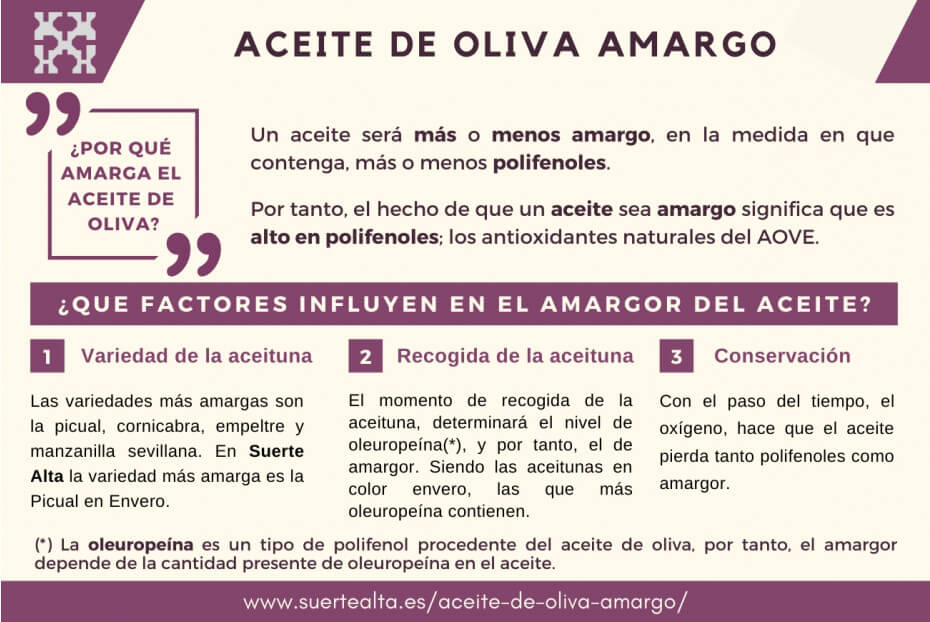
What Determines the Bitterness of an EVOO?
Bitterness depends on the amount of oleuropein (a type of polyphenol), which in turn depends on three factors:
- The olive variety: this determines the base level of polyphenols.
- The time of harvest: olives at veraison (when they turn from green to purple) contain more oleuropein. Early harvest oils are the most bitter.
- Storage: over time, contact with oxygen causes the oil to lose polyphenols and, therefore, bitterness. Fresh oils are more bitter.
The Most Bitter Varieties
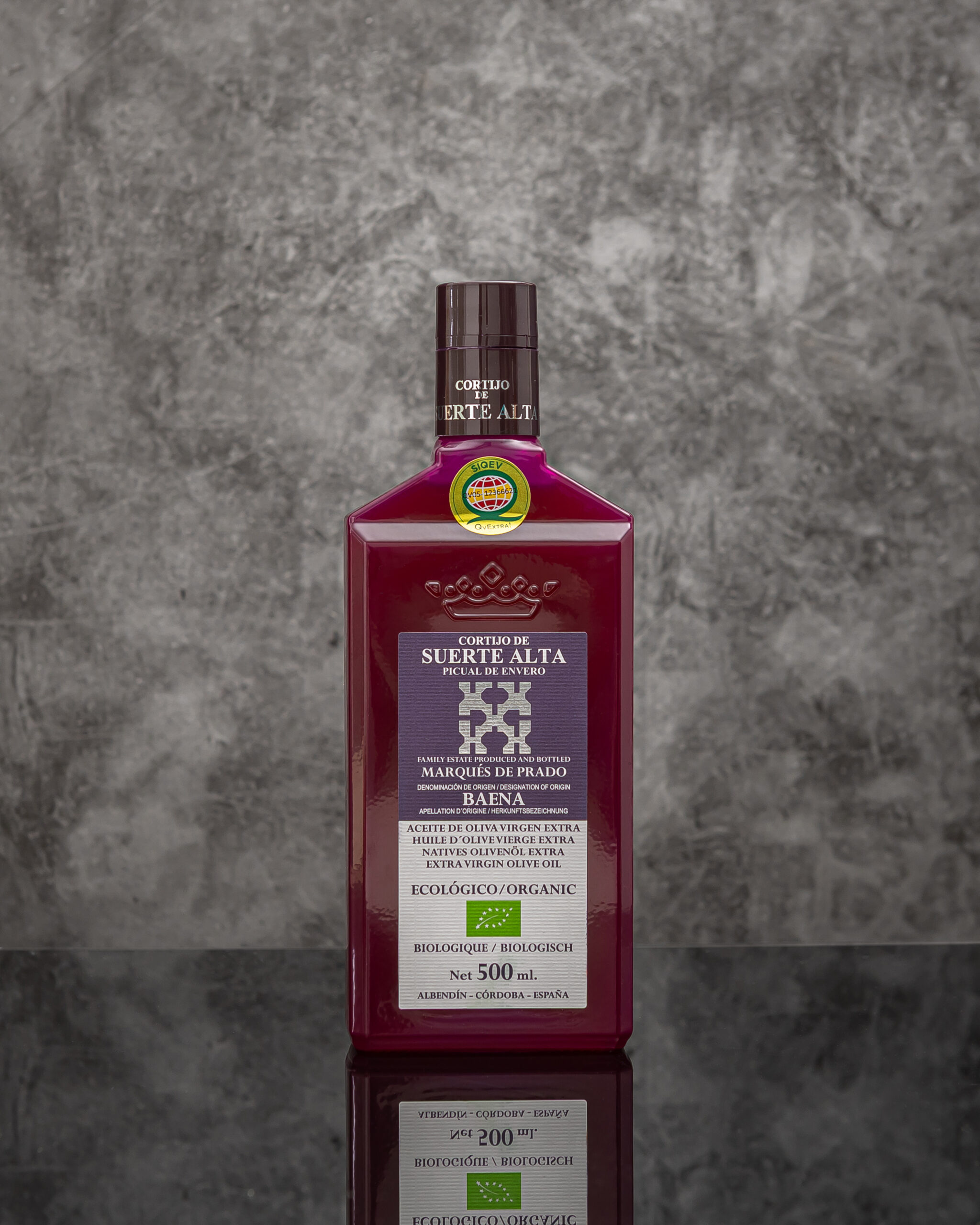
Picual, Cornicabra, Empeltre and Manzanilla Sevillana. At Suerte Alta, our most bitter oil is Picual en Envero: produced from olive groves aged between 10 and 40 years, with moderate bitterness and pungency, aromas of almond, tomato plant and citrus, high in natural antioxidants and very stable.
Frequently asked questions about bitter olive oil
No, quite the opposite: it indicates a high content of polyphenols and antioxidants.
Picual, along with Cornicabra, Empeltre and Manzanilla Sevillana.
Because olives picked at veraison (turning from green to purple) contain more oleuropein than ripe olives.
The olive variety, the time of harvest (oils from olives at veraison are more bitter) and storage, as bitterness decreases over time.