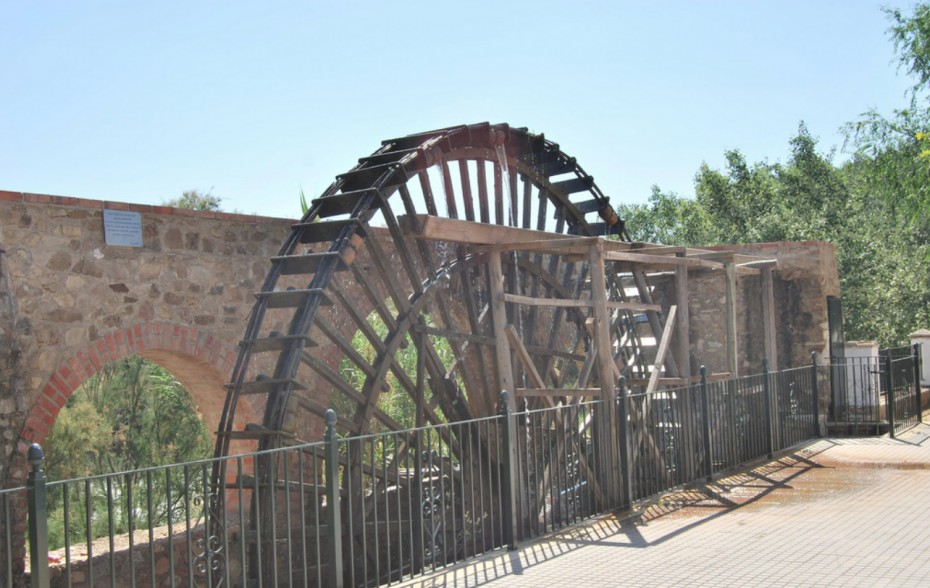

An oil mill is defined as the place where olives are pressed to obtain olive oil. The first oil mills, of very ancient origin (Copper Age), consisted of a type of stone mortar where small quantities of olives were pressed.
KEY FACT
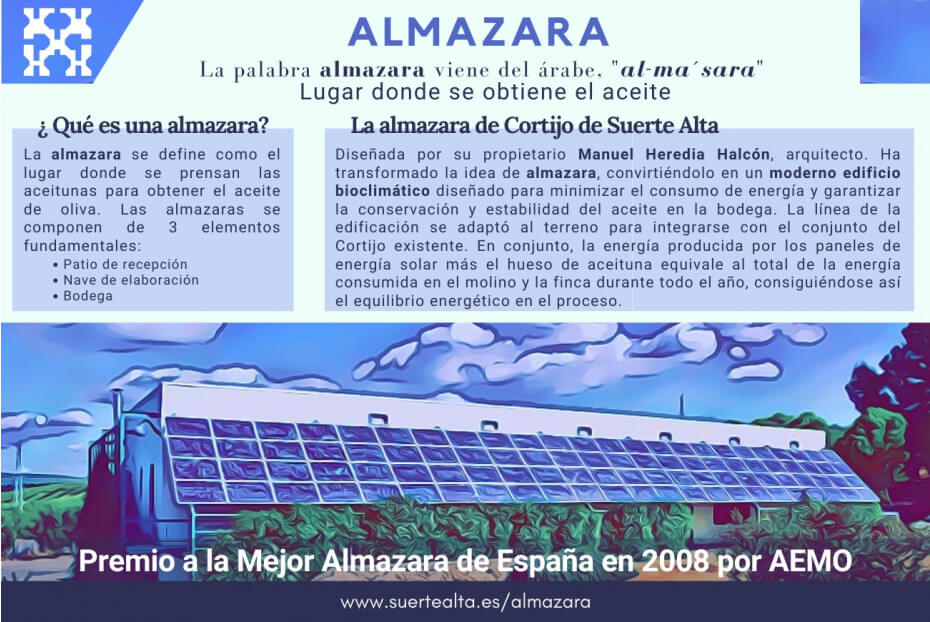
The word ‘almazara’ comes from Arabic, al-ma´sara, meaning ‘place where oil is obtained’.
Parts of an oil mill: how it is organized
Currently, oil mills are composed of three elements:
Reception Yard: This is the area where olives are received, cleaned, washed, weighed, and stored, awaiting milling.
Processing Bay: This is an enclosed space where the olives are milled, then the resulting paste is beaten, centrifuged, and cleaned of water. Once this process is complete, the olive oil is stored in stainless steel tanks.
Cellar: This is an enclosed, dark space, free of humidity and with a stable temperature, where olive oil is stored in stainless steel tanks. The cellar must have a conical bottom for easy cleaning.
Suerte Alta’s oil mill: bioclimatic design and energy efficiency
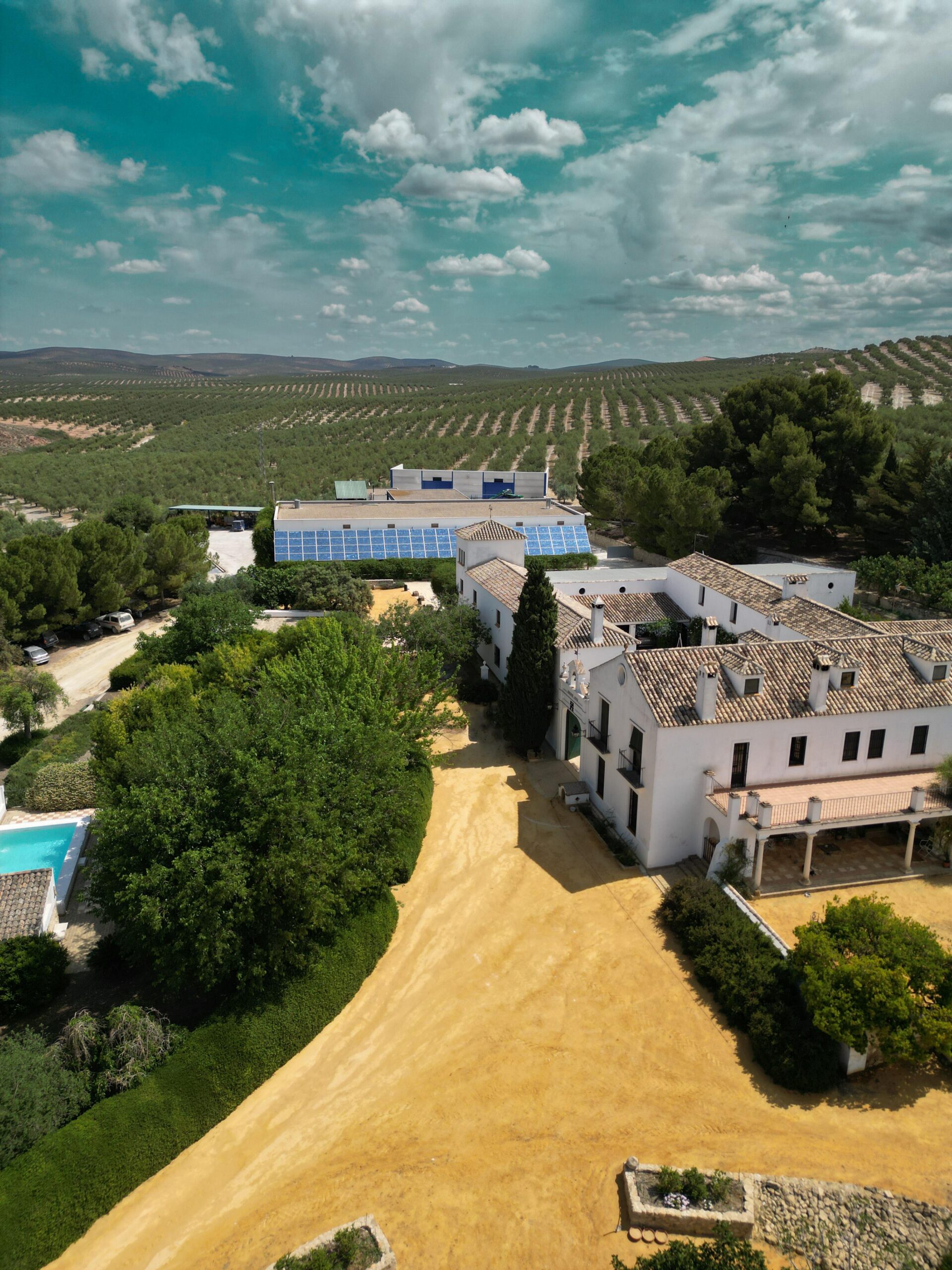
Our oil mill was conceived by its owner, Manuel Heredia Halcón, an architect. He transformed the idea of an oil mill, turning it into a modern bioclimatic building designed to minimize energy consumption and ensure the conservation and stability of the oil in the cellar.
The building’s design adapted to the terrain to integrate with the existing Cortijo, partially burying the cellar volume and protecting the building from the summer sun with pergolas, green screens, and photovoltaic panels. The heating and hot water for the mill use the olive pit itself as fuel.
Overall, the energy produced by the solar panels plus the olive pit fuel equals the total energy consumed by the mill throughout the year, thus achieving energy balance in the process.
Cortijo de Suerte Alta received the AEMO Award for Best Oil Mill in Spain in 2008.
Frequently Asked Questions about the Oil Mill
‘Almazara’ comes from the Arabic ‘al-ma´sara’, meaning “place where oil is obtained.” It is the name given to the facility where olives are processed to extract olive oil.
A modern oil mill is divided into three areas: the reception yard, where olives are received, cleaned, weighed, and stored; the processing bay, where the paste is milled, beaten, and centrifuged; and the cellar, where the oil is stored in stainless steel tanks under stable temperature and dark conditions.
The olives are cleaned and milled to obtain a paste, which is then beaten and centrifuged to separate the oil from vegetable water and solids. The resulting oil is cleaned, filtered, and stored in the cellar until bottling.
Yes. Cortijo de Suerte Alta’s oil mill is an example of this: it combines photovoltaic solar panels with the use of olive pits as fuel, achieving complete energy balance throughout the entire production campaign.