How the type of olive grove and the intended use of the olives determine the most suitable harvesting method.
KEY FACT
From hand-stripping in the century-old olive grove to harvesting machines in the super-intensive grove: three methods, three olive groves, one shared goal
Types of olive harvesting: manual, semi-automated and automated.
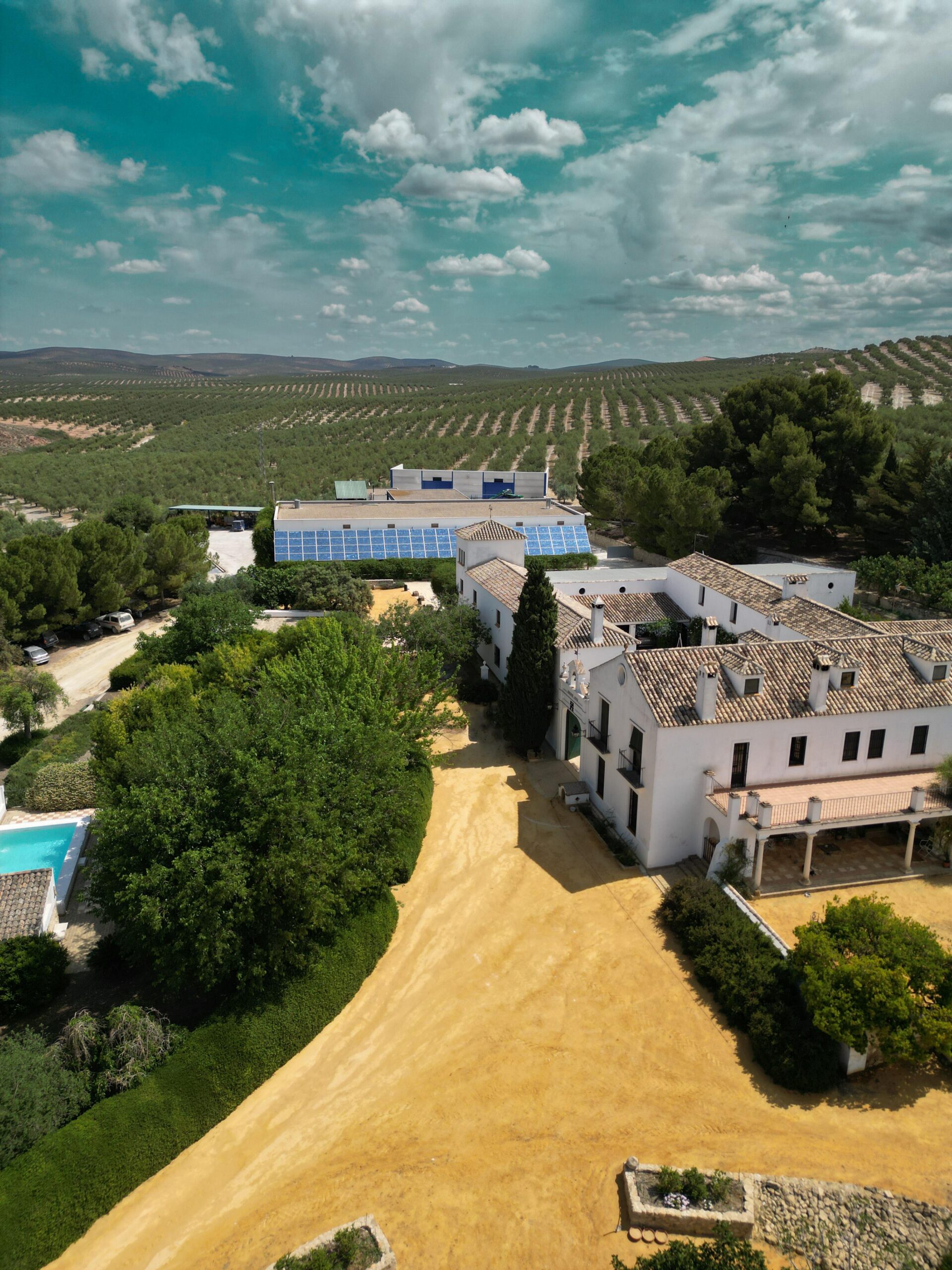
The way olives are harvested depends on the type of olive grove and on whether the crop is intended for table olives or for olive oil production. All the olives that reach our mill are grown by us and come from three types of olive grove. On the Suerte Alta estate, located within the Baena Designation of Origin, a traditional, almost century-old olive grove coexists with a young, intensively planted grove. On the Seville estate, a super-intensive plantation dedicated to producing the Arbequina oil of our Marqués de Prado brand sits alongside a plantation of Manzanilla olives intended for table olives.
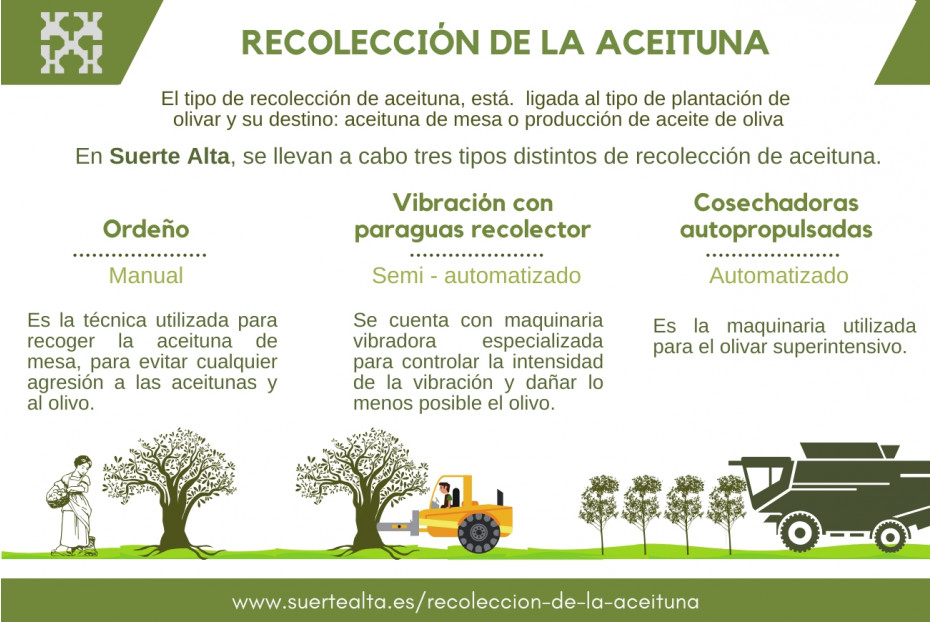
This variety of crops means that three different types of olive harvesting are carried out at Suerte Alta.
Manual olive harvesting: hand-stripping.
The olives are harvested by hand. This is the technique we use to pick our table olives, as it is essential to avoid any damage to the fruit. It is also the technique that causes the least harm to the olive tree. It is the most labour-intensive technique and therefore the most expensive way of harvesting.
Semi-automated harvesting: shaking with an umbrella harvester.
Suerte Alta has its own shaking machinery, which is essential for controlling the intensity of the vibration and causing as little damage as possible to the olive trees.
For harvesting the intensive plantation, it has the most advanced machinery in this field, which adds an umbrella harvester to the self-propelled shaker, so there is no need to collect the olives on nets.
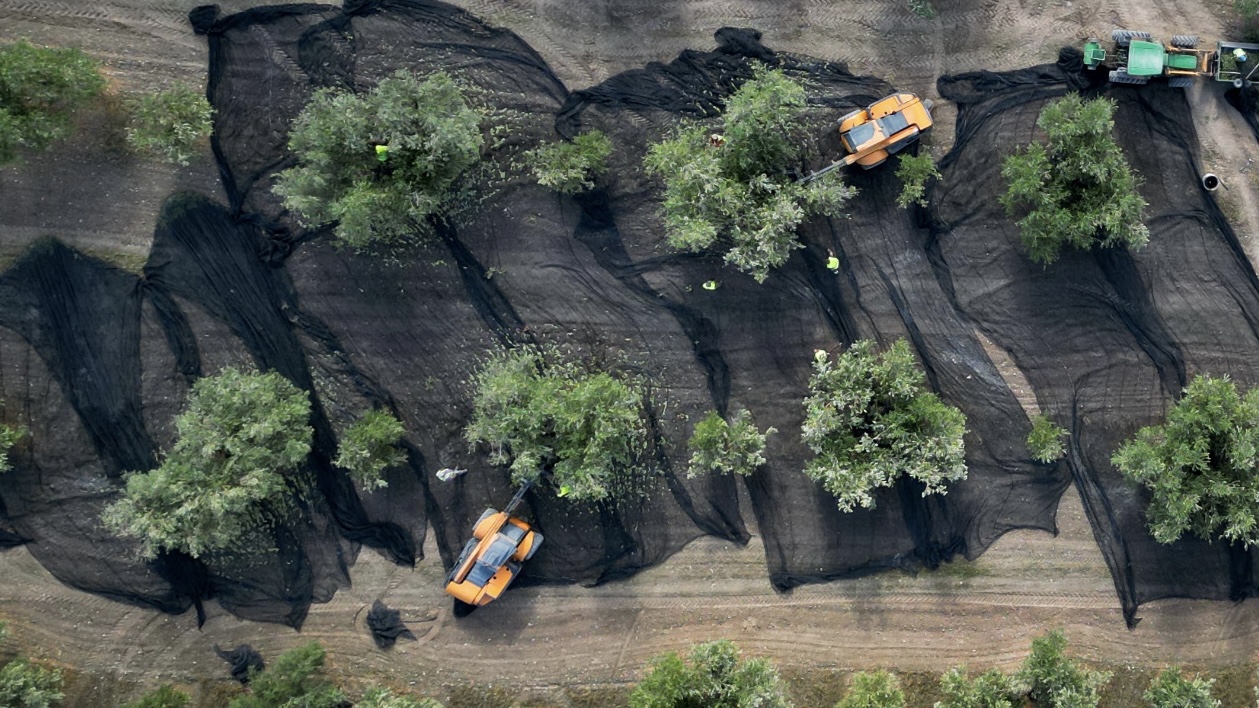
In the traditional olive grove it is not possible to use the umbrella, because the olive trees have three trunks and the umbrella cannot close around them. Instead, shakers are used and the olives fall onto nets, which are then gathered with a “cajón” (collection box).
Automated harvesting: self-propelled harvesters for the super-intensive olive grove.
Harvesting in the super-intensive olive grove in Seville is carried out with harvesters. These machines share a common base with grape harvesters and are similar in appearance and operation. It is the harvesting method that requires the least labour and is therefore the most economical.
Frequently asked questions about olive harvesting
There are three main types: manual harvesting by hand-stripping, semi-automated harvesting with a shaker and umbrella harvester, and automated harvesting with self-propelled harvesters. The choice of method depends on the type of plantation and the intended use of the olives, whether as table olives or for oil production.
Table olives are harvested by hand-stripping, as it is the only technique that guarantees the fruit suffers no damage. It is the most labour-intensive method, but the one that best preserves the integrity of the olive.
In the intensive olive grove, shakers with a self-propelled umbrella harvester are used, so there is no need to collect the olives from the ground with nets. In the super-intensive olive grove, the density and layout of the trees allow the use of harvesters similar to grape harvesters, which significantly reduces the labour required.
The trees in a traditional olive grove usually have three trunks, which prevents the umbrella from closing properly around the tree. For this reason, these plantations use shakers, and the olives fall onto nets that are then gathered by hand with a “cajón” (collection box).