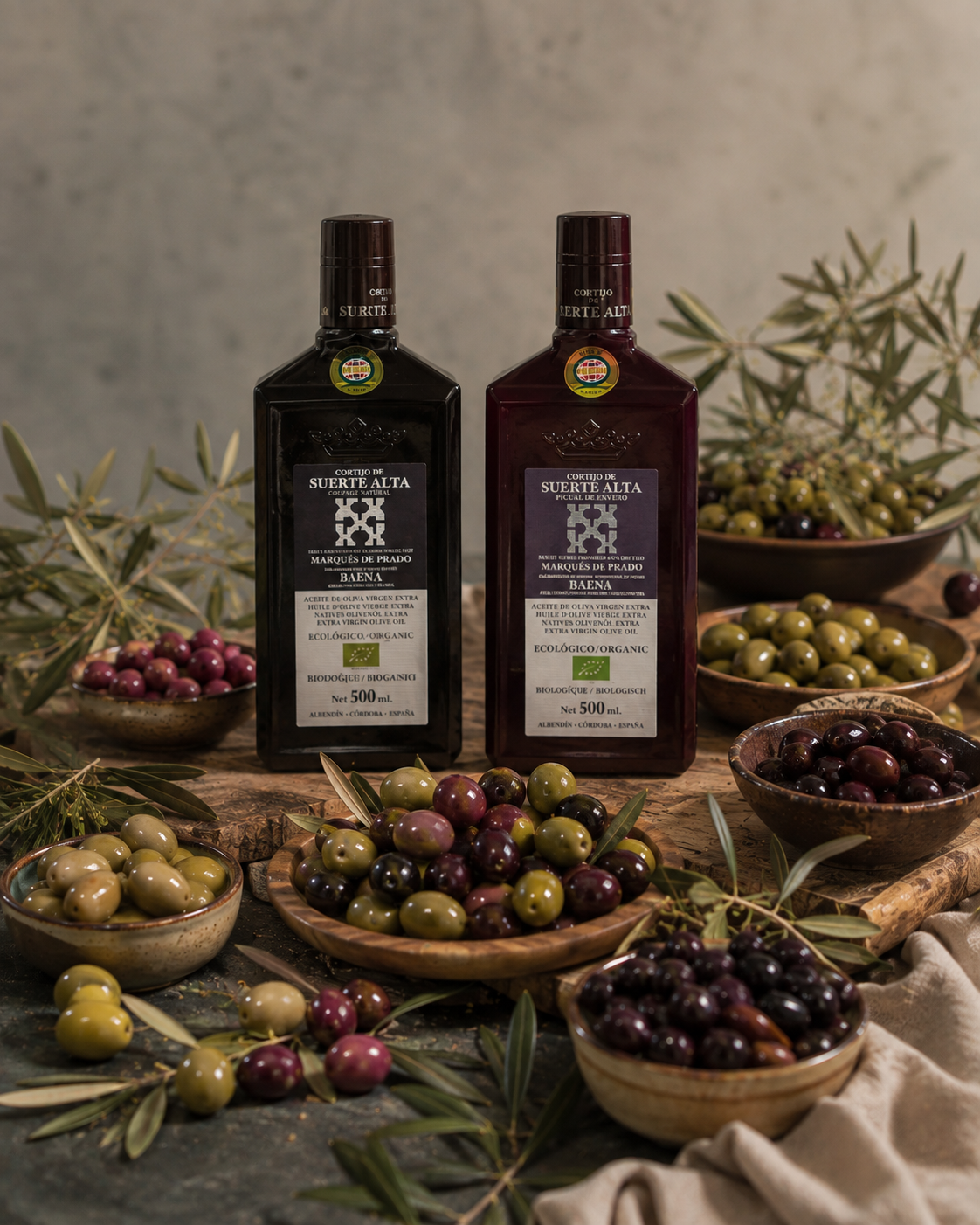
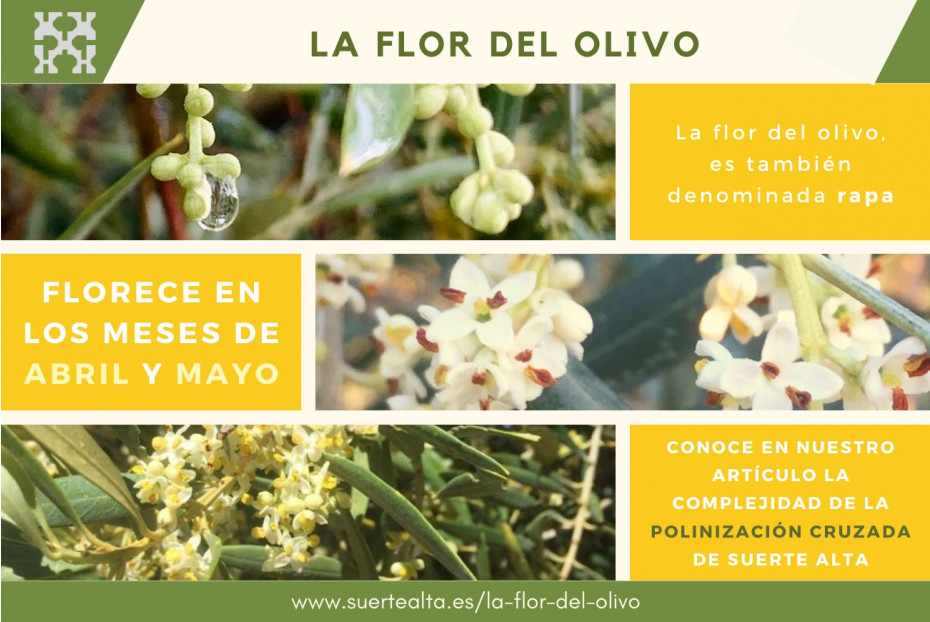
The “rapa” (olive flower) is surprisingly discreet and striking at the same time. Discreet because almost nobody notices it; striking because, at its peak, it covers the base of the olive tree as if it were snow.
KEY FACT
Only 2% of olive flowers are pollinated and go on to become olives.
A curious fact: olive pollen grains travel hundreds of kilometres, even reaching Morocco. In this way, olive trees in Andalusia pollinate Moroccan olive trees and vice versa, fostering genetic diversity and explaining the huge variety of olives that exist today.
The flowering cycle
The olive tree flowers between April and May. After a few weeks, a white layer of fallen flowers is left beneath the trees: only 2% are pollinated, and of that 2% the tree carries out a kind of “screening”, shedding some of the new fruit to ensure the proper growth of those that remain. Flowering lasts barely a week.
Cross-pollination and Natural Coupage
It occurs when one variety is pollinated by a different one, for example Hojiblanca by Picual. In our century-old olive grove, where Picual, Picudo and Hojiblanca trees grow intermingled, the resulting olives are not 100% any single variety, but a natural blend of all three. This cross-pollination is partly responsible for the unique nuances of our Natural Coupage, an EVOO that is very difficult to reproduce.
Frequently asked questions about the olive flower
Between April and May, for barely a week.
Only 2% are pollinated, and of that percentage the tree discards some to ensure the growth of the rest.
When one olive variety pollinates a different one. In our century-old olive grove, it is responsible for the unique nuances of Natural Coupage.
Barely a week, between April and May.