Olive oil quality is officially measured to determine which category it belongs to: extra virgin olive oil, virgin olive oil or refined olive oil.
KEY FACT
QvExtra’s SIQEV seal requires acidity below 0.3 and more than 200 ppm of polyphenols, well above the official standards (0.8 acidity, with no minimum for polyphenols).
But how can consumers tell which extra virgin olive oil is of the highest quality when faced with the supermarket shelf? In this article we cover both topics: how quality is determined using the official method, and how consumers can identify a quality EVOO.
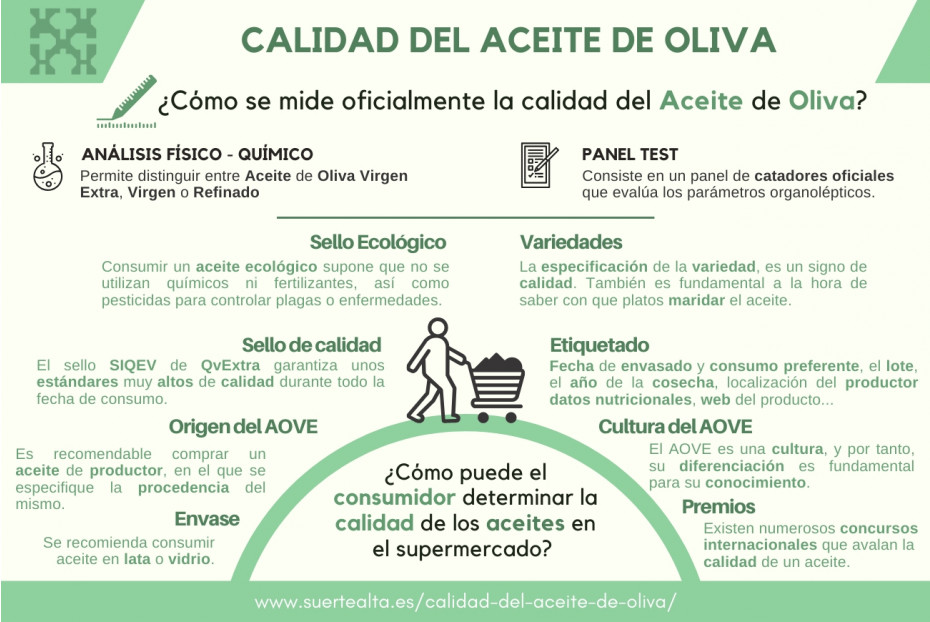
How is the quality of olive oil officially measured?
The quality of an oil is measured using physicochemical parameters. To distinguish a virgin from an extra virgin oil, a Panel Test is also carried out: a panel of official tasters assesses the organoleptic attributes under set conditions of temperature and anonymity. Designations of Origin, QvExtra, the International Olive Council and the Spanish Ministry of Agriculture all champion the Panel Test as the only reliable system currently available for distinguishing EVOOs.
How to recognise a quality EVOO in the supermarket
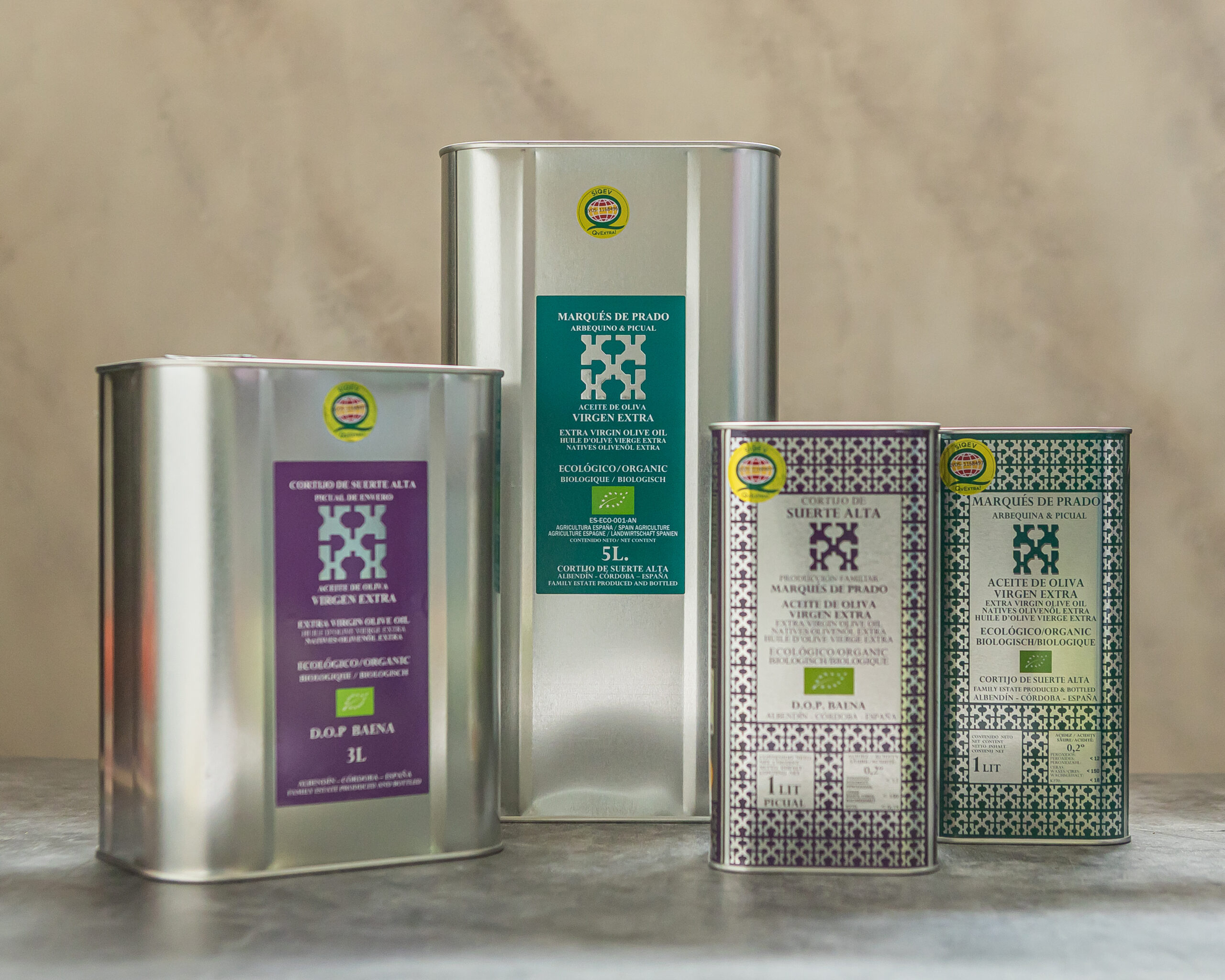
- Packaging: avoid plastic (it migrates into the oil and does not protect it from light); choose glass or tins.
- Origin: look for producer EVOOs with a clear provenance or a Designation of Origin. Cortijo de Suerte Alta belongs to the Baena PDO, the oldest in Spain.
- Quality seals: QvExtra International’s SIQEV seal requires acidity below 0.3 (compared with the standard 0.8) and more than 200 ppm of polyphenols.
- Organic seal: guarantees the absence of chemicals, fertilisers and pesticides. Suerte Alta has been farming organically for 25 years and has a bioclimatic mill that generates its own energy.
- Variety stated on the label: an Arbequina is mild and sweet, a Picual is bitter and herbaceous, and a Hojiblanca has its characteristic pungency.
- Full labelling: official seals, packing and best-before dates, harvest year, and producer and mill details.
- Awards: quality producers enter their oils in international competitions and publish the results.
Frequently asked questions about EVOO quality
A tasting carried out by official tasters under controlled conditions of temperature and anonymity, which determines whether an oil can be classified as extra virgin.
Because plastic migrates into the oil and does not protect it from light, so its quality deteriorates over time.
Acidity below 0.3 and more than 200 ppm of polyphenols, standards stricter than the official ones.
They serve as an objective reference: quality producers enter their oils in national and international competitions and publish the results they obtain.