
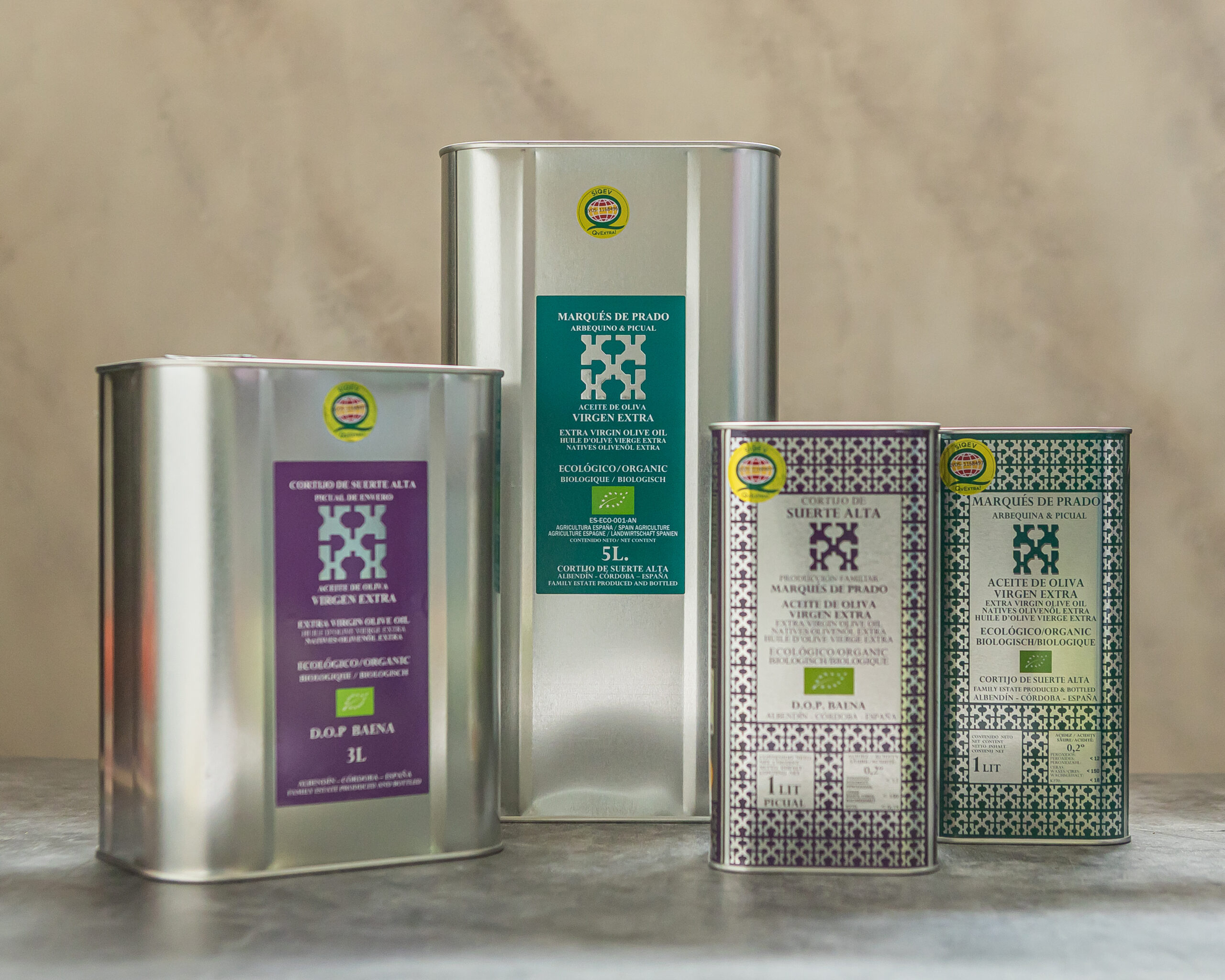
There are many ways to package olive oil. In the eyes of consumers, the packaging says a great deal about its quality. At Cortijo de Suerte Alta we do not use plastic: we only package our oils in glass and tins
KEY FACT
In a real-life test, a sample sent by mistake in a plastic bottle showed a sharp rise in phthalate levels after just three days of contact.
Plastic is lighter and cheaper, but it spoils the quality of the oil because compounds from the plastic migrate into it. By way of example: we once sent a sample by mistake in a plastic bottle instead of the usual glass one, and the plastic residues (phthalates) in the results soared after just three days of contact.
Glass vs. Tin
Glass is airtight and both chemically and thermally stable. Its drawbacks: it is heavy and fragile, and it has to be tinted to protect the oil from light (which accelerates oxidation).
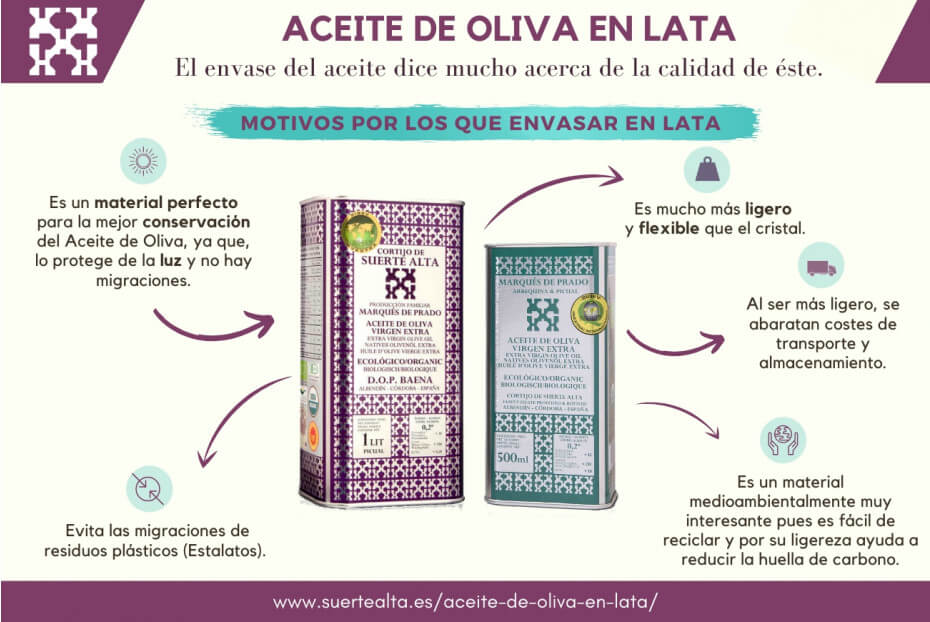
Tins protect the oil from light, do not cause migration, are lighter and more flexible (reducing transport and storage costs) and are easy to recycle, which lowers the carbon footprint.
How Suerte Alta Packages Each Variety
- Marqués de Prado: in glass bottles and in tins.
- Coupage Natural: in glass only.
- Picual en Envero: in bottles and in tins.
Frequently asked questions about olive oil packaging
Because compounds from the plastic (phthalates) migrate into the oil, and plastic does not protect it from light, which degrades its quality.
Both protect well against light; tins are lighter and more sustainable, while glass is more stable but heavy and fragile.
Glass only.
In glass bottles and also in tins. Coupage Natural, on the other hand, is packaged in glass only.