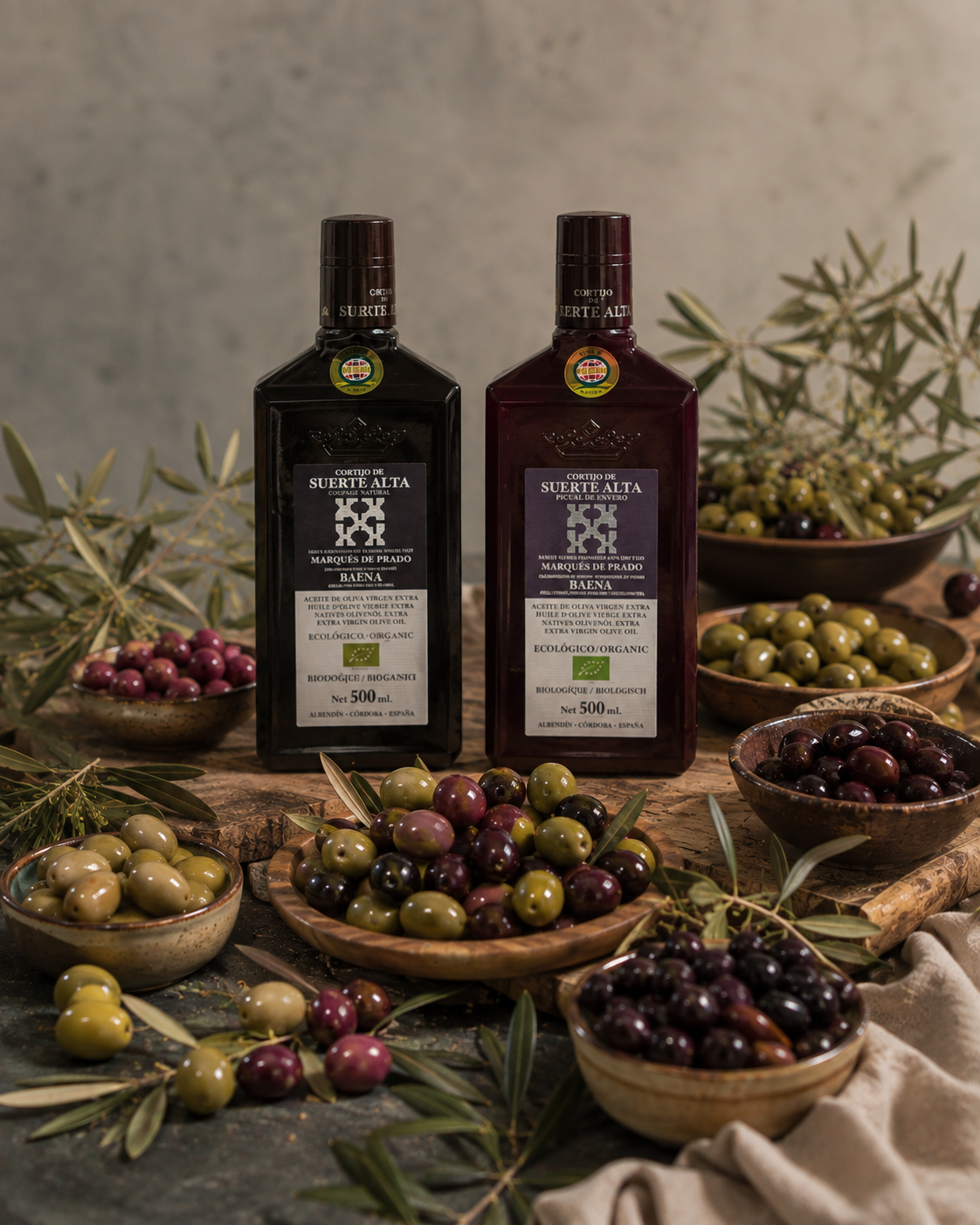
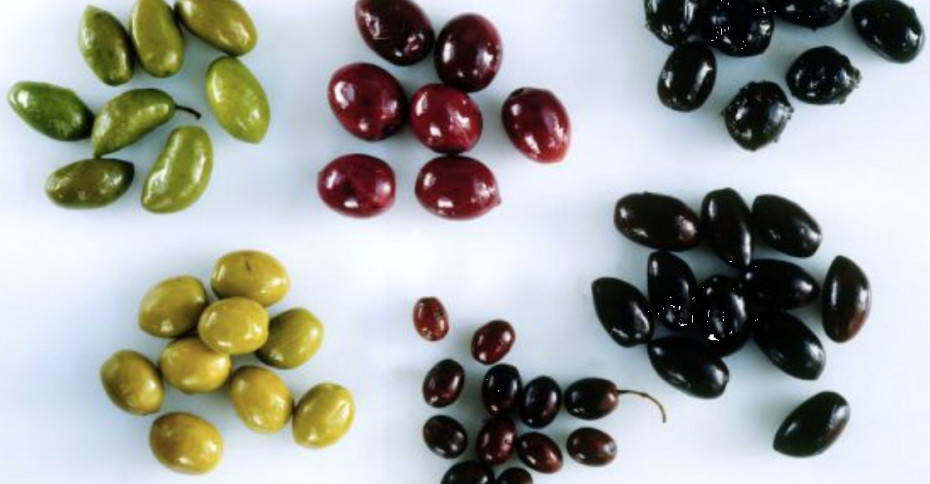
There are many varieties of olive trees and, therefore, of EVOO. The variety of an oil gives it organoleptic characteristics that make it distinct from others.
KEY FACT
Around 200 different varieties of olives are grown in Spain.
At Cortijo de Suerte Alta, we cultivate the varieties native to the province of Córdoba, plus the Arbequina from our estate in Seville.
The varieties of Suerte Alta
Picual: predominant in the peninsula and the world, named for its peak-like shape. Found mainly in Jaén, Córdoba, and Granada, with a high oil yield.
Hojiblanca: owes its name to the light color of its leaves. It is used for both oil and table olives, with late ripening and medium-large size.
Picudo or Carrasqueño: originating from Baena (Córdoba), also present in Jaén, Granada, and Málaga. Its name comes from its curved and pointed shape; good for oil, although traditionally used as a table olive.
Arbequina (at the Seville estate, for Marqués de Prado): the most widely cultivated in Catalonia, named after Arbeca (Lleida). Small size and large pit, not very suitable for table olives, early ripening.
Frequently asked questions about the olive
About 200.
Picual, Hojiblanca, and Picudo in Córdoba, and Arbequina at their estate in Seville.
The Hojiblanca.
The Arbequina, which is used to produce Marqués de Prado.